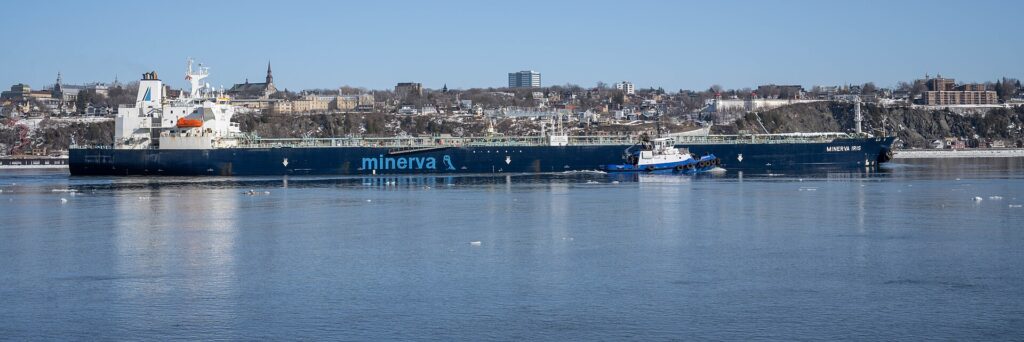
Two tankers were attacked within hours of each other on Friday off Saudi Arabia’s Al Jubail port — the first struck by an unknown projectile, the second by a rocket-propelled grenade fired from a small boat. Both crews are safe. The incidents mark the first time in this war that commercial ships have been hit so close to one of the kingdom’s most important industrial and oil export hubs.
The attacks were reported on Saturday by the United Kingdom Maritime Trade Operations (UKMTO), the Royal Navy-run agency that monitors merchant shipping in the region, in two official warnings.
What happened
The first incident occurred at about 9am UTC on Friday, roughly 68 nautical miles (125 km) northeast of Al Jubail. In warning 174-26, UKMTO said it had received a delayed report from a company security officer that a tanker had been struck by an unknown projectile. All crew were safe and had been evacuated, and there was no environmental damage at the time of the report.
Maritime security agency Vanguard identified the vessel as the Marshall Islands-flagged crude oil tanker Safeen Principal, saying it lost power and suffered an engine-room fire in the attack.
The second incident happened the same evening at 7:22pm UTC, about 78 nautical miles northeast of Al Jubail. This time the report came from the ship’s master himself: his tanker had been attacked by an RPG fired from a small boat, which damaged the vessel’s aft port quarter. The crew were all accounted for and safe, though UKMTO said a complete damage assessment was not yet available. “Vessels are advised to transit with caution and report any suspicious activity to UKMTO whilst authorities investigate,” the warning concluded.
Neither attack has been attributed to any group.
Why Jubail matters
Al Jubail is not just another coastal town. Sitting on Saudi Arabia’s Persian Gulf coast, it is home to Jubail Industrial City — one of the largest petrochemical complexes on earth — and the King Fahd Industrial Port, a major export gateway. Until now, most attacks on commercial shipping in the Iran-US war had centered on the Strait of Hormuz, the narrow waterway tankers must pass to leave the Gulf. Friday’s incidents were far north of the Strait, off a working Saudi port — inside the Gulf itself.
A third tanker, 15 Indian sailors safe
Separately, a crude oil tanker carrying 15 Indian crew members was struck by a projectile in the Strait of Hormuz on Friday. India’s ports minister Sarbananda Sonowal said on X that everyone aboard the MT ST 3 was safe and unhurt, and that India remained in contact with the ship’s management. “Thankfully, all 24 Indian nationals across both vessels are completely safe with no casualties or injuries,” he said — referring also to the chemical tanker YARA J, which was hit by a drone off Romania’s Sulina anchorage on October 14.
A surging war at sea
The attacks are part of a record surge in violence against commercial shipping. On Friday, Iran’s Revolutionary Guard Corps claimed a supertanker carrying 2 million barrels of crude hit a naval mine in the Strait of Hormuz; earlier in the week, two ships sank near the strait within 24 hours. UKMTO’s weekly review counts 135 such incidents amid the Iran-US conflict in the strait, plus six ships attacked in the Red Sea.
Oil markets have already priced in the risk: Brent crude traded above $110 a barrel on Friday, its highest level in months.
Why this matters
The Strait of Hormuz is the chokepoint everyone watches, but Friday’s attacks show the danger has moved inside the front door. A projectile and an RPG — one of them fired from a boat small enough to be anywhere — striking tankers off a major Saudi port means the threat is no longer confined to the waterway everyone is guarding. The coastal routes where ships load up for the journey out are now in play too. Every such attack feeds directly into war-risk insurance premiums and tanker charter rates, which is one reason oil is trading above $110. For the world’s energy supply, the question is no longer only whether tankers can get through the Strait — it is whether they are safe long before they reach it.



One Comment