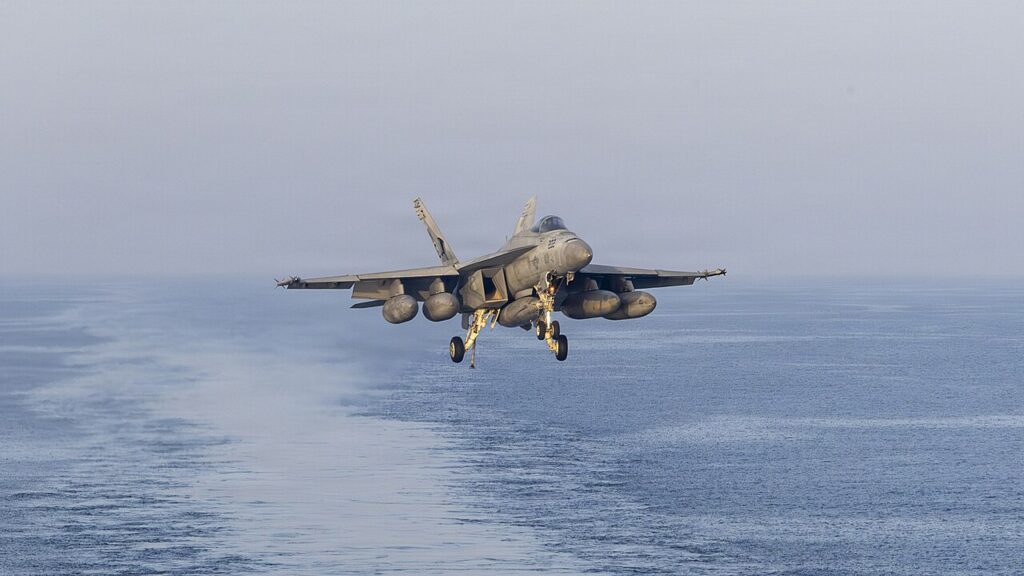
VERDICT: FALSE — No, Iran did not attack a US aircraft carrier on 3 November 2026. The viral video is AI-generated, and it had already been online since at least May 2026 — months before the attack it supposedly shows.
The claim
On 3 November 2026, a post on X by the account @abuzarali749 claimed that Iran had just launched a major attack on an American warship. “BREAKING NOW,” it began, claiming that “about an hour ago, Iran launched a massive missile and drone attack on a US aircraft carrier, resulting in the immediate deaths.”
Attached was a short, blurry, 14-second clip that appeared to show the carrier’s island — the tower structure on the flight deck — being hit. The post named no specific ship, gave no location, and cited no source beyond “according to reports.” It spread the same day, quickly enough that fact-checkers picked it up within hours.
The facts
1. The video is older than the “attack.” This is the decisive point. The clip had already been circulating online since at least 28 May 2026, when it was used to promote other false claims. A video that existed in May cannot show an event that supposedly happened on 3 November.
2. An AI detector rated it 99% likely to be AI-generated. When fact-checkers at Lead Stories ran the clip through the detection tool AI or Not, it concluded the video was 99% likely to have been generated by artificial intelligence. That score alone would not settle it, but combined with the clip’s earlier online history, it points the same way: manufactured footage, not a recording of a real strike.
3. No credible report of any such attack exists. A search of news coverage for 3 November turns up no report — from any major news organisation, wire service, or official source — that Iran hit a US aircraft carrier that day. A strike on an American carrier, with deaths aboard, would be reported everywhere, immediately, with statements from the Pentagon and the White House. None of that exists. The only coverage of this specific claim is the debunking of it.
4. The US military’s own channels said nothing of the sort. On 3 November, fact-checkers reviewed the US Central Command (CENTCOM) account on X and the press-release section of its website. Neither contained anything confirming a carrier attack. CENTCOM is the command responsible for US forces in the region, and it has publicly reported real Iranian attacks on US vessels in the past — for example, a September 2026 attempt on a US warship, which it said the vessel evaded with no American personnel harmed. The absence here is therefore meaningful: when US ships are actually attacked, CENTCOM says so. Here, it said nothing, because there was no such attack to report.
5. Real tensions do not make this clip real. The United States and Iran are in an active conflict that began in February 2026, and just a day earlier, on 2 November, US forces struck targets on Iran’s Qeshm Island in what officials described as a defensive operation. That real, dangerous backdrop is exactly why a fake carrier video spreads so easily: readers already know the region is at war, so a dramatic clip feels plausible. But plausibility is not evidence. The question is whether this video shows a carrier being hit on 3 November. It does not.
Verdict
FALSE. The claim that Iran attacked a US aircraft carrier on 3 November 2026 is false. The 14-second clip attached to the claim is AI-generated footage that had been online since at least May 2026, months before the supposed attack. No credible news report and no US military statement confirms any such strike, and the command responsible for the region reported nothing of the kind on the day.
Why it matters
Fake footage of a carrier strike is not harmless internet noise. In an active war, a convincing video claiming American sailors have just been killed can inflame public anger, pressure governments toward escalation, and drown out verified reporting when accurate information matters most. It follows a pattern seen throughout this conflict: old or AI-generated combat footage, stripped of context, is recaptioned as breaking news and shared before anyone checks the date. The defence is simple: check when the footage first appeared. If the video is older than the event it claims to show, the claim collapses — no matter how dramatic the pictures look.
Related fact-checks: No, Benjamin Netanyahu was not attacked in Tel Aviv — that video is from Bulgaria in 2013; No, Indian and Chinese troops did not exchange fire — that video is Kazakhstan training footage.
Sources: Lead Stories’ 3 November debunking of this clip; US Central Command’s public releases.