The United States has now recorded more than 5,000 measles cases in a single year for the first time since 1991. New figures published by the Centers for Disease Control and Prevention — the CDC, America’s national public health agency — put the 2026 total at 5,182 confirmed cases as of 5 November, a count that has more than doubled in a year and keeps climbing.
When we last covered the outbreak in October, the tally stood at 4,080 cases. In less than a month, more than 1,100 further cases have been added, and the weekly updates show no sign of the curve bending. The whole of 2025 produced 2,289 cases.
The numbers behind the surge
Almost all of this year’s cases — 4,993 of the 5,182, or 96 per cent — are linked to outbreaks, and the CDC counts 43 separate outbreaks in 2026. Cases have been reported by 47 jurisdictions, with a further 18 among international visitors to the US. Most of those infected were unvaccinated or had an unknown vaccination status.
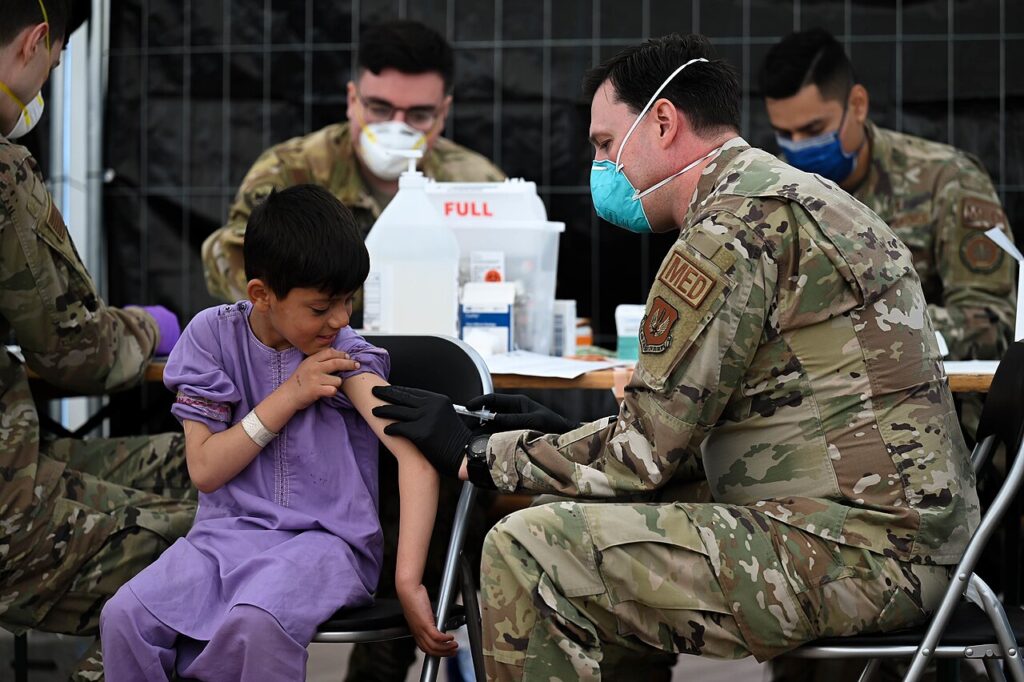
Children are carrying the heaviest share. About 59 per cent of confirmed cases are under 20: 18 per cent are children under five, and 41 per cent are aged five to 19. Measles is one of the most contagious viruses known — one infected person can pass it to nine in ten unprotected people in the same room, and the virus can hang in the air for up to two hours after they leave.
The backdrop is a slow slide in vaccination. Coverage among kindergarten children — measured by the MMR vaccine, which protects against measles, mumps and rubella — has fallen from 95.2 per cent in the 2019–20 school year to 92.4 per cent in 2025–26, below the roughly 95 per cent needed for herd immunity, the level at which the virus struggles to find its next host. Some states have dropped below 90 per cent. Two doses of the MMR vaccine are about 97 per cent effective, according to the CDC.
A dispute over how many have died
The death toll has become a row in its own right. The CDC’s national count lists four measles deaths this year. Pennsylvania, the worst-hit state with 1,487 cases, counts six — and state health departments across the country have between them reported eight measles-associated deaths.
The gap comes down to definitions. Pennsylvania counts a death as measles-associated when a confirmed case dies within 30 days of symptoms starting, unless an unrelated event caused it. In August, the CDC removed two Pennsylvania deaths from its national tally after the US health secretary, Robert F. Kennedy Jr., questioned whether measles had caused or contributed to them. Pennsylvania’s governor, Josh Shapiro, has publicly challenged that decision, and the CDC says it is working with the Council of State and Territorial Epidemiologists — the body that represents state disease trackers — to settle on a single standard definition.
Epidemiologists have told Al Jazeera that counting measles-associated deaths in this way has long been the standard used by the World Health Organization and by the CDC itself.
“This is a serious, highly contagious viral disease and the only strategy we have to fight it is vaccination. And that is a strategy that has worked very well for many, many years,” said Dr Marietta Vázquez, a paediatric infectious diseases specialist at Yale Medicine. “If people are saying no to this vaccine, we need to consider what their reasons are and if they have the information they need.”
Why this matters
Measles was declared eliminated in the United States in 2000 — meaning it no longer spread continuously within the country — and for two decades the annual case count usually stayed in the low hundreds. Losing that status is not an American problem alone. The US is one of the world’s busiest travel hubs, and every imported case is a chance for the virus to reach a community where vaccination has slipped. The World Health Organization estimated about 11 million measles cases and 95,000 deaths worldwide in 2024, and an independent commission of public health experts is due to review this month whether the US still meets the standard for elimination. The WHO is expected to examine the question on 10 November.
It is not the only outbreak stretching disease trackers this year. In Kenya, a second Ebola case was confirmed in October, linked to the country’s first, and health officials there faced the same race to trace contacts before the virus moved on. The pattern is the same everywhere: the systems that catch outbreaks early only work when the numbers underneath them are trusted.
The CDC publishes its measles count weekly, and with outbreaks still active in dozens of states, the total is expected to keep rising. For now, the milestone stands: a disease the United States had beaten back a generation ago is spreading faster than at any point in 35 years — and the country cannot even agree on how many people it has killed.